
Four disciplines that have to agree.
A control room is a single system made of space, hardware, software, and people. MCEG works across all four so the decisions made in one do not quietly break another.
Decide what the room is for.
The most expensive control room mistakes are made before design starts: the wrong staffing model, the wrong span of control, the wrong assumptions about what operators actually watch. Consulting engagements settle those questions first.
- Operational assessments: how the room performs today, measured against how it is required to perform.
- Control room strategy: consolidation, distribution, redundancy, and the operating model behind them.
- Human factors: workload, vigilance, situational awareness, sightlines, lighting, acoustics, and fatigue.
- Best practices: alignment with established standards for control centre ergonomics and operations.
Draw it so it works at hour nine.
Design turns the operating model into geometry: what each operator can see, reach, hear, and ignore. It accounts for the shift that started eight hours ago, not the walkthrough on opening day.
- Control room layouts: tiering, sightline analysis, viewing distances, circulation, and adjacency.
- Ergonomics: console geometry, sit-stand ranges, monitor arrays, reach zones, and anthropometrics.
- Video walls: display technology, resolution and pitch selection, mounting, and content zoning.
- Furniture and workspace planning: console specification, cable management, and support spaces.
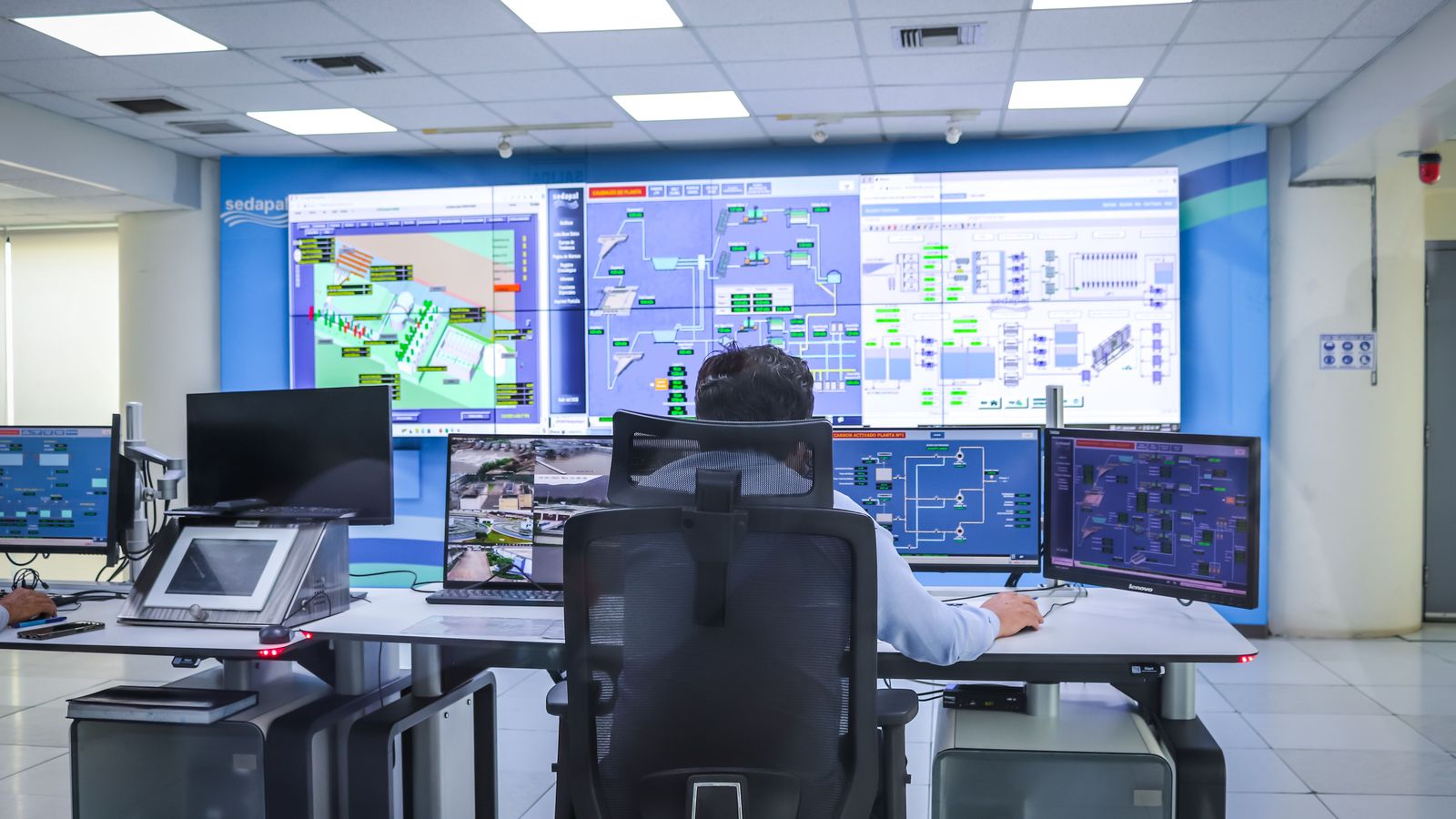
Get the right picture to the right person.
Technology in a control room is judged on one thing: whether the information an operator needs arrives fast enough to act on. Everything else is procurement.
- Systems integration: source management, control systems, and integration with operational platforms.
- Visualization: video wall processing, layouts, presets, and content strategy.
- AV and communications: audio, intercom, radio, collaboration, and secure conferencing.
- Alarm management: rationalization, prioritization, and suppression of alarm floods.
The room only counts when it is staffed.
A well-designed room with weak procedures underperforms a modest room with strong ones. Operations engagements build the practices, documentation, and training that make performance repeatable across every shift.
- SOP development: standard, emergency, and escalation procedures written for the people who use them.
- Training: operator onboarding, scenario exercises, and competency development.
- Readiness assessments: verification that people, systems, and procedures are prepared before go-live.
- Performance optimization: measurement, tuning, and continuous improvement after commissioning.
Start where it hurts.
Engagements scale from a two-week assessment to full program leadership across a multi-site modernization. Most begin with a single question about a room that is not performing the way it should.